PowerUp Workout
A workout planner and tracker that treats training like a long-running game you play against yourself - without putting the useful parts behind a heavy monthly subscription.
Make workout planning and honest set-by-set tracking fast enough to use in the gym, then turn that record into positive, meaningful progression - without a heavy recurring fee, shame, or comparing unlike bodies by raw weight alone.
The tool I wanted did not exist at a sensible price
I built PowerUp for myself. I wanted to plan a real multi-week program, track every set, rep and weight, and see whether I was actually getting stronger. The apps I tried either missed part of that loop or charged a significant recurring fee. The one I liked cost $30 a month. That was too much for a workout log.
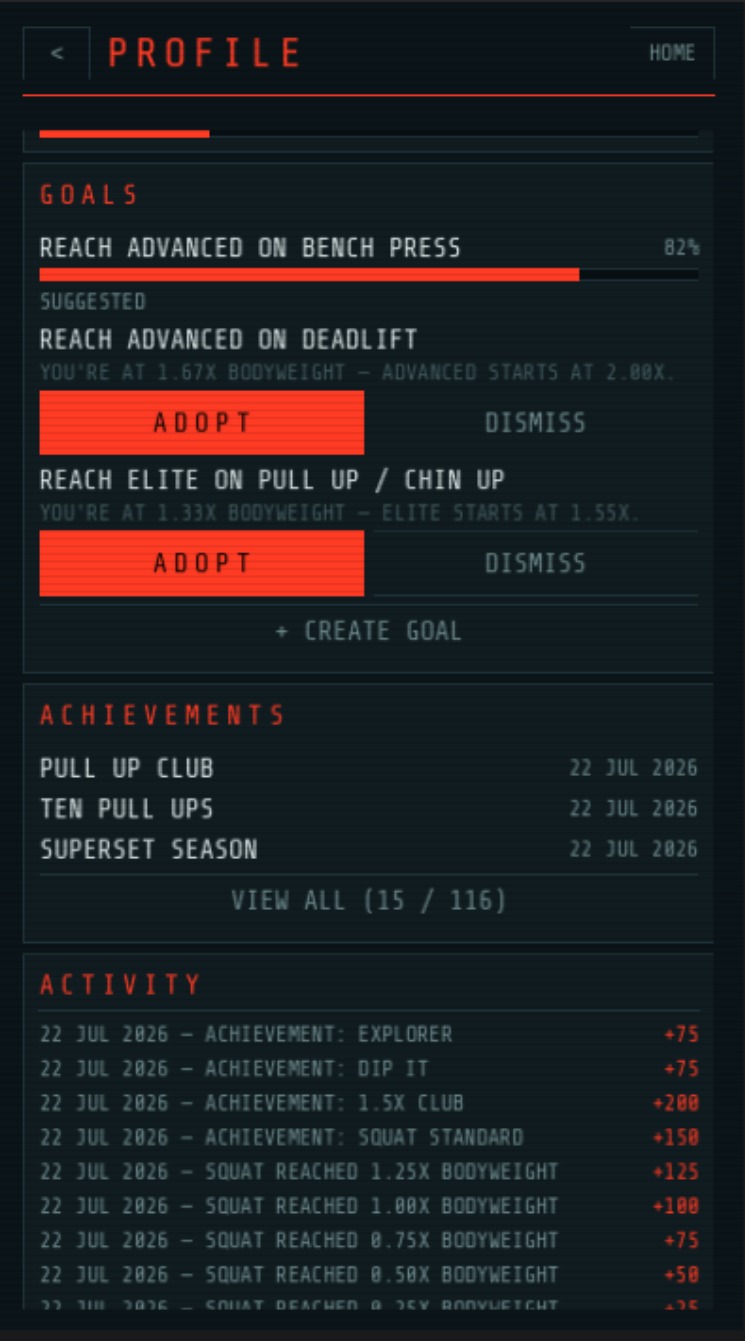
The product starts with a useful free core: build a program, follow it in the gym, and keep an honest history of what happened. The differentiator is what that record becomes. PowerUp turns it into personal bests, strength ratings, goals, XP, levels and achievements, all inside one coherent progression system.
A plan that survives real life
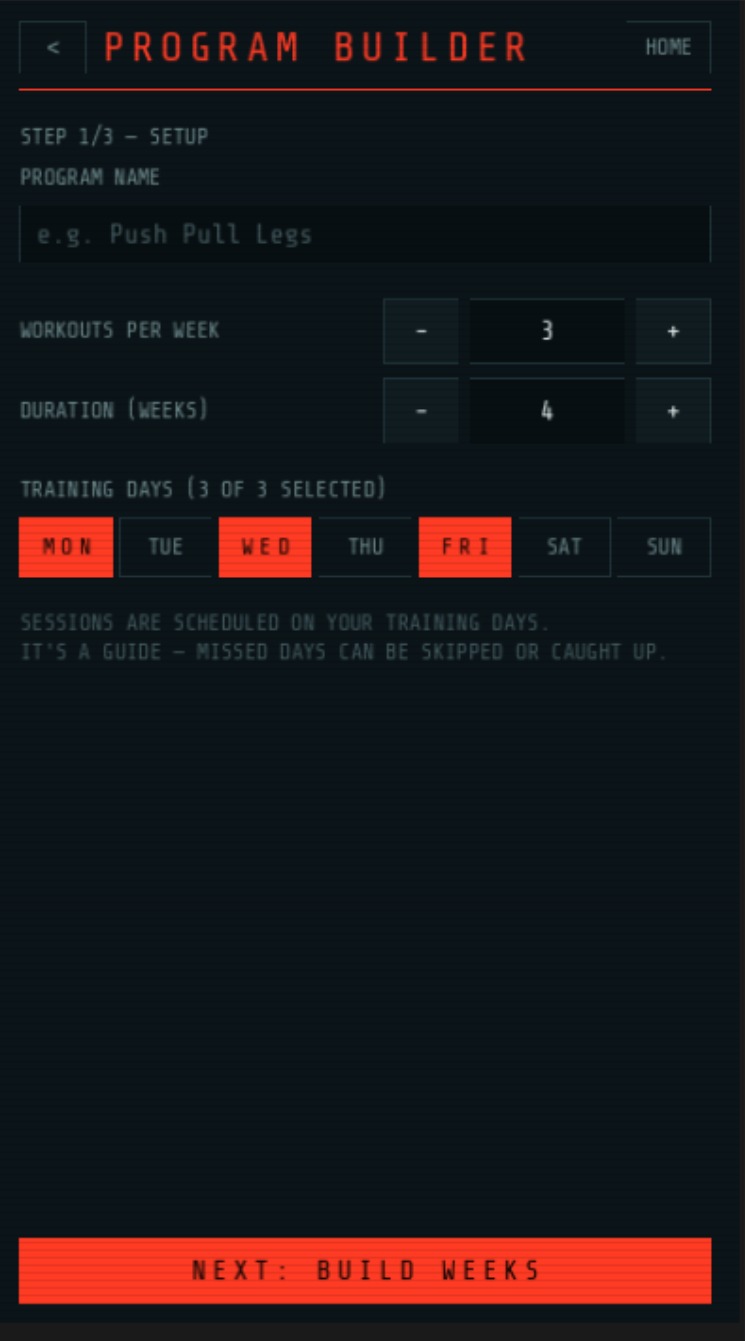
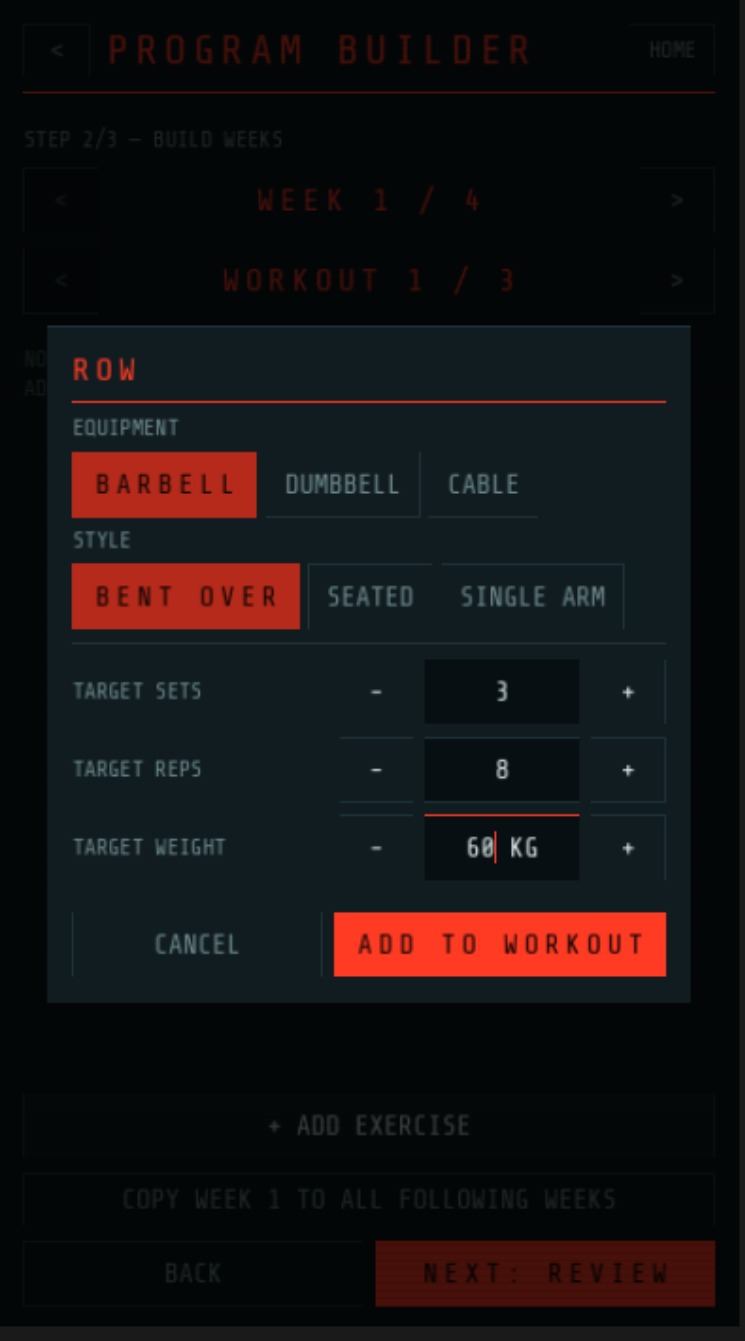
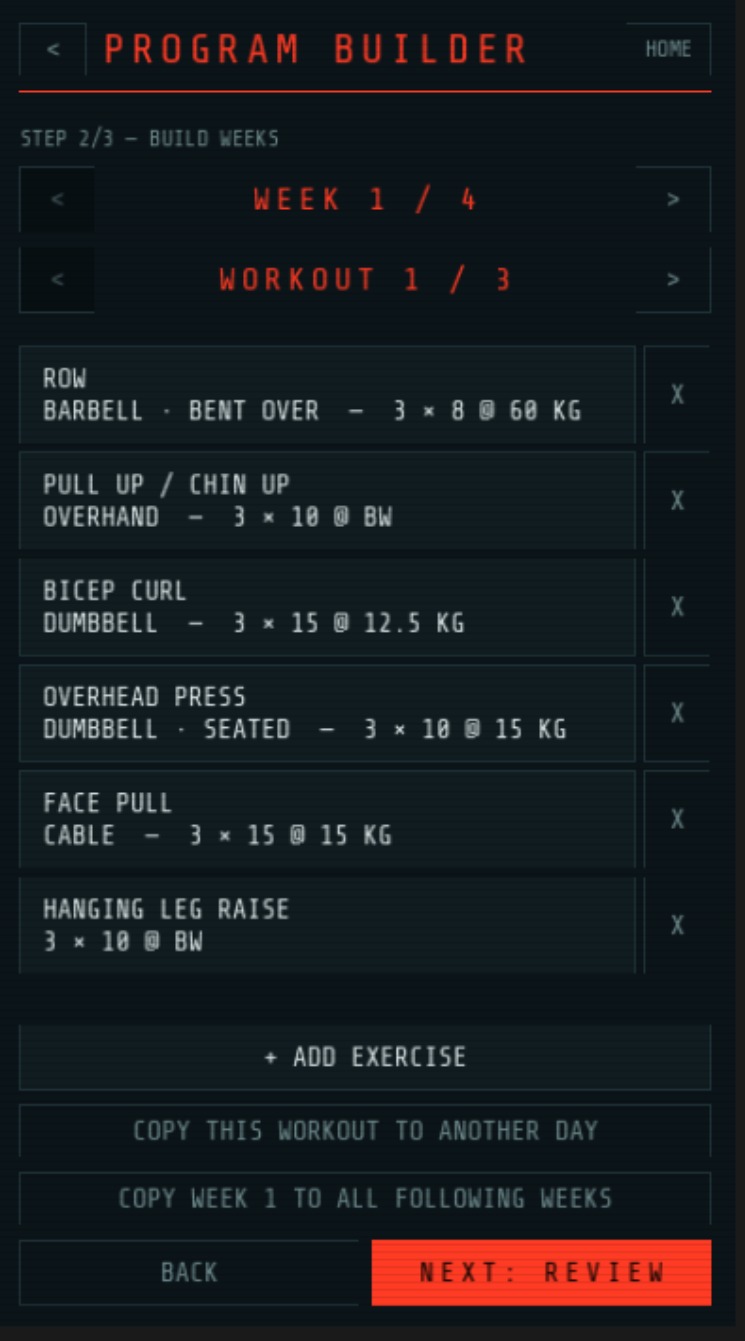
The program builder sets the shape first - training days, workouts per week and duration - then lets the user build each week from a library of strength, cardio and mobility exercises. Workouts can be copied across days and full weeks can be copied forward, so building a twelve-week plan does not mean entering the same session twelve times.
Targets belong to the program, not to a disposable session. After training, PowerUp compares the plan with what actually happened and asks whether each changed target should be updated, kept, or replaced with a custom value. The plan learns, but only with the user's consent. Missed a day? Catch up next and the calendar shifts around real life instead of marking the user as a failure.
Log the work, not the paperwork
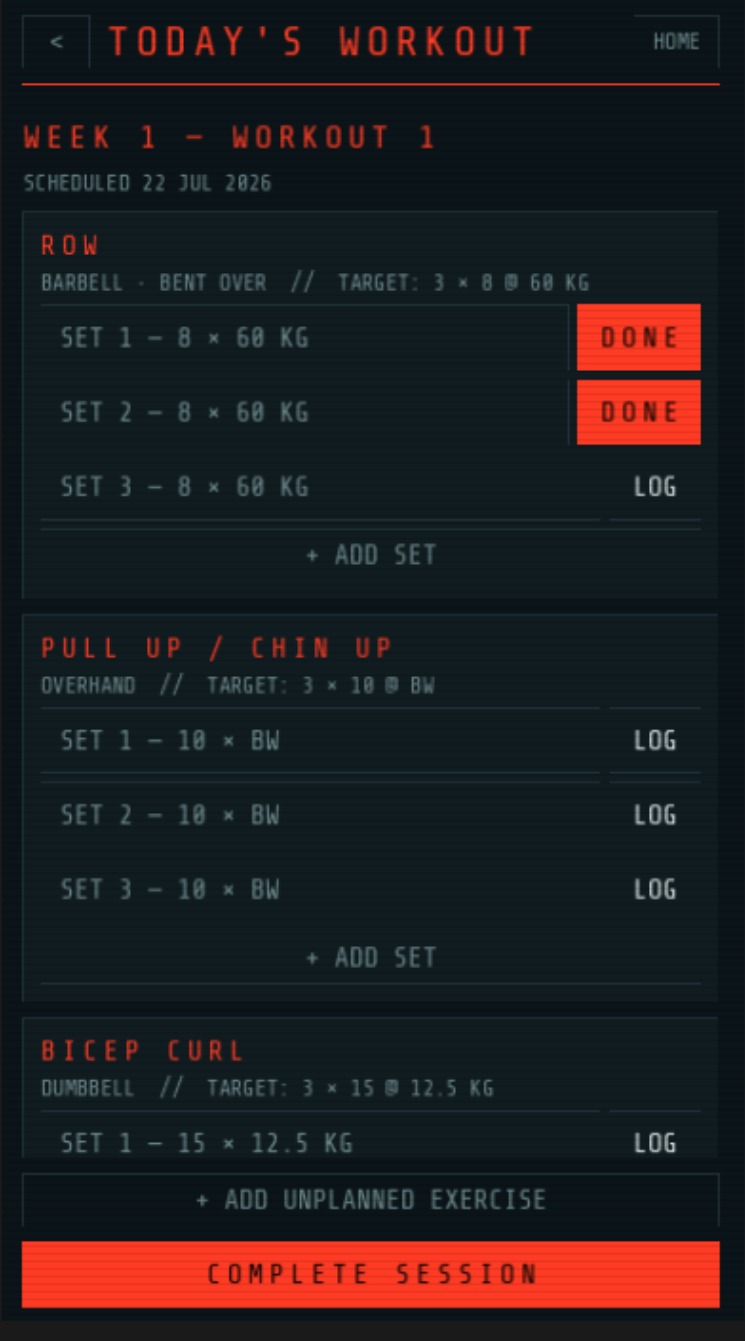
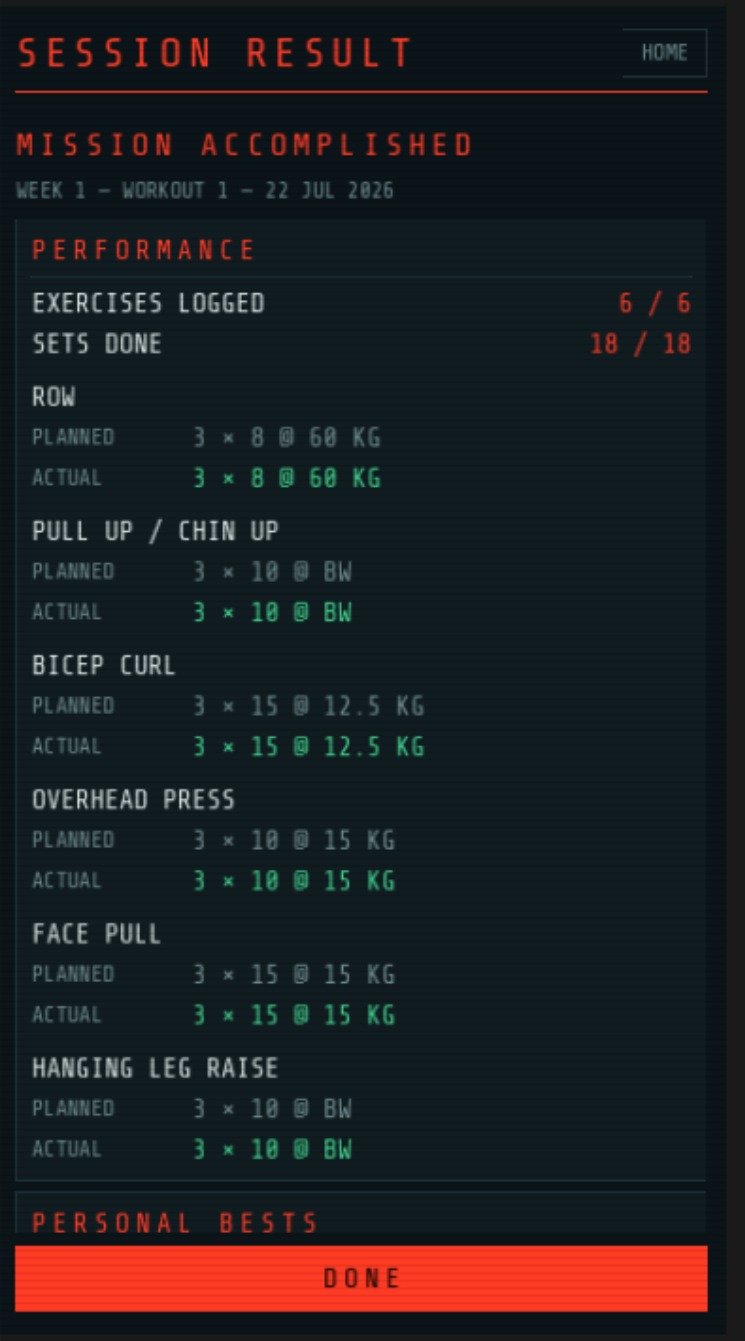
On training day, every planned set is already filled with its target. If the set went as planned, logging it is one tap. If it changed, reps, weight and load type are close at hand. Unplanned exercises are first-class rather than an awkward note. Each exact variant - equipment, grip, angle, stance and style - keeps its own history, because an incline dumbbell press is not the same progression as a flat barbell press.
Strength only means something in context
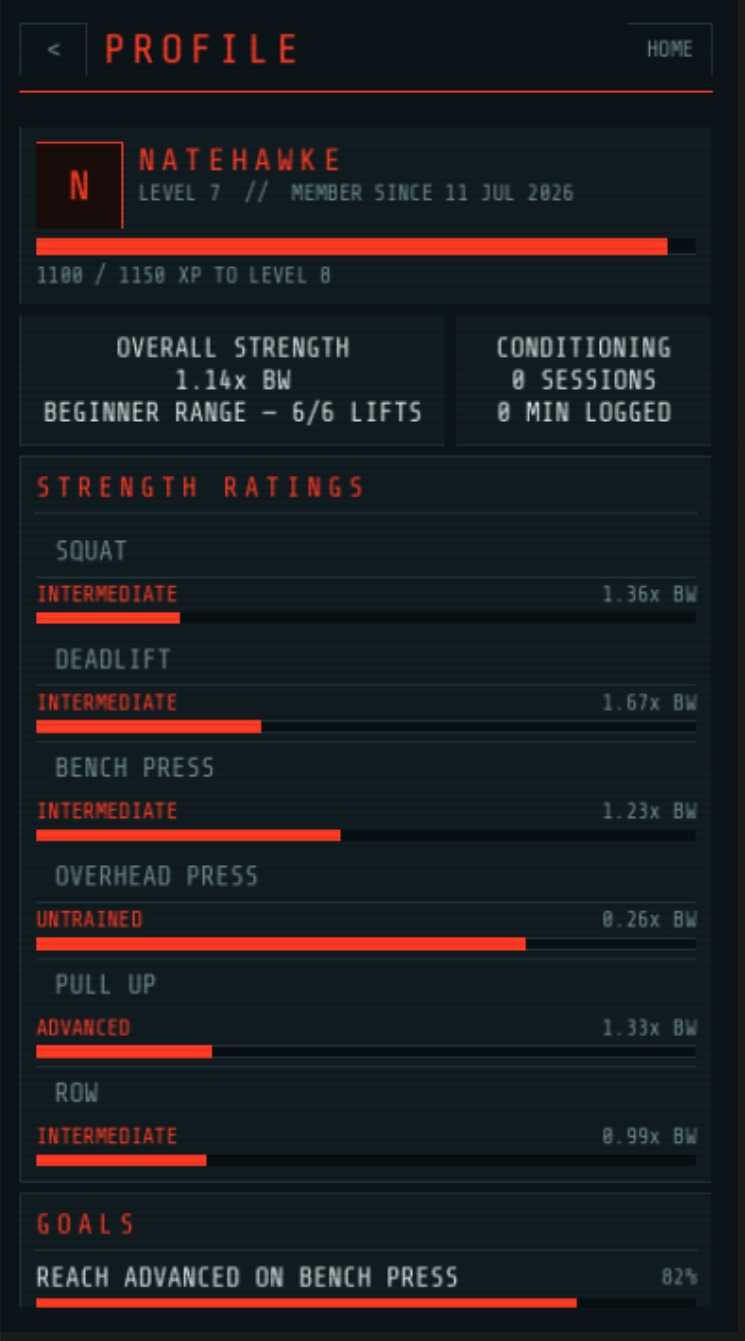
A raw number is a poor comparison between different bodies. PowerUp estimates one-rep max from the user's logged sets, divides it by current bodyweight, and matches that ratio against published population standards for six key lifts. A 150-pound bench can be ordinary for one person and a serious achievement for another. The rating is there to recognise the second person too.
The system is careful about what it claims. It does not name an overall tier until at least three key lifts have data. Users who prefer not to provide sex simply see personal progression instead of population ratings, and older users are told plainly where the available standards stop being a fair comparison. The goal is motivating context, not false precision.
Positive by design
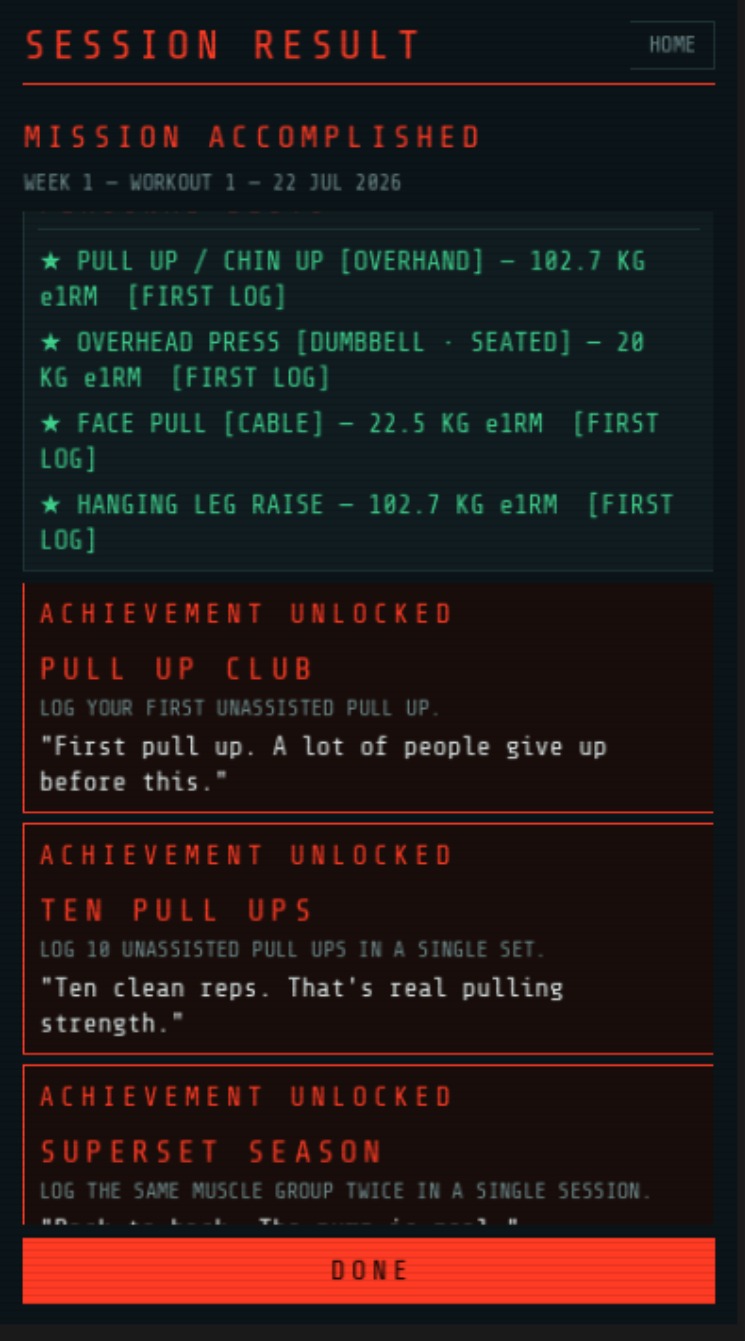
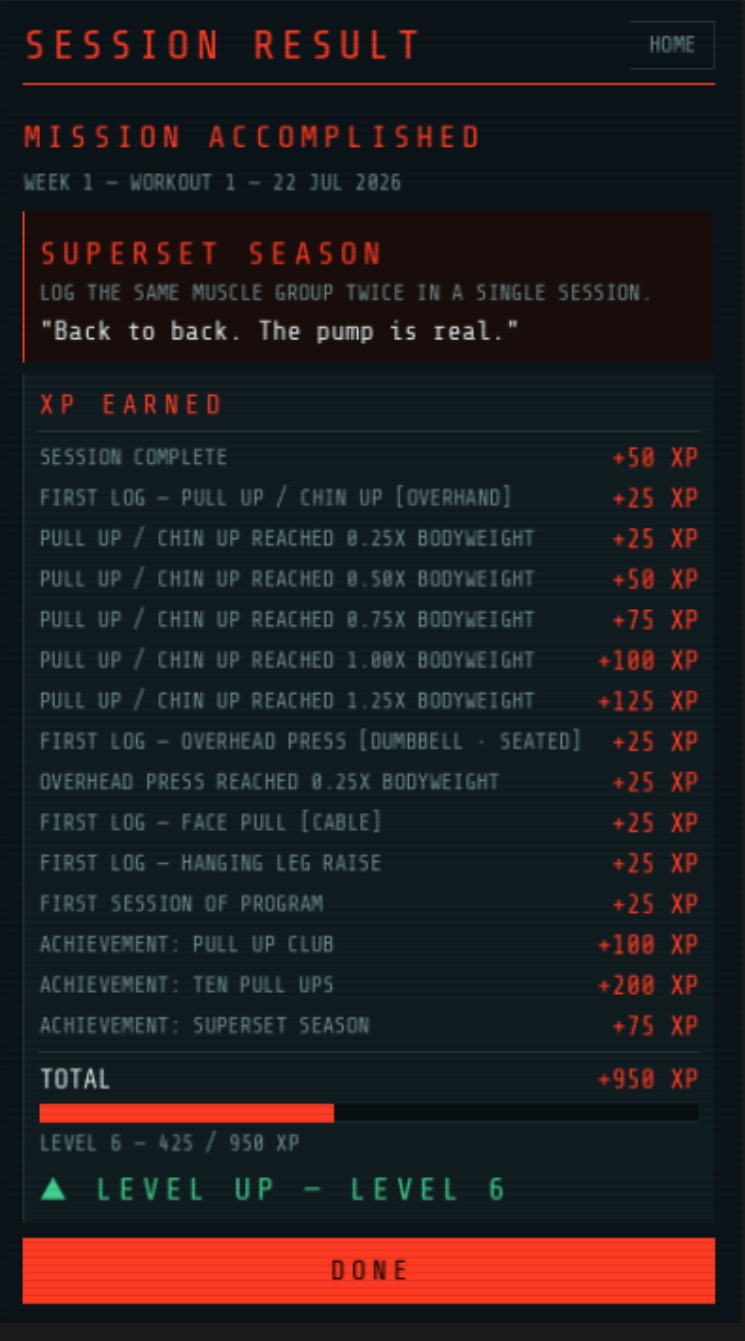
Green is reserved for wins: targets hit, personal bests and level-ups. Everything else stays neutral. There is no red failure state and no streak designed to punish a missed week. Completing a session becomes a short ceremony - performance first, then PBs, goals, achievements and XP - before the practical target-update decisions appear.
Game-shaped, not sticker-chart gamification
Showing up earns XP, but the progression layer goes deeper than a daily streak. Six goal types track themselves from workout history. The app suggests the next strength target when a lift is close to a new bracket. A catalog of 116 achievements covers strength, consistency, cardio, mobility and the odd realities of training, with 47 hidden discoveries for things like returning after a long break or making a hotel gym work.
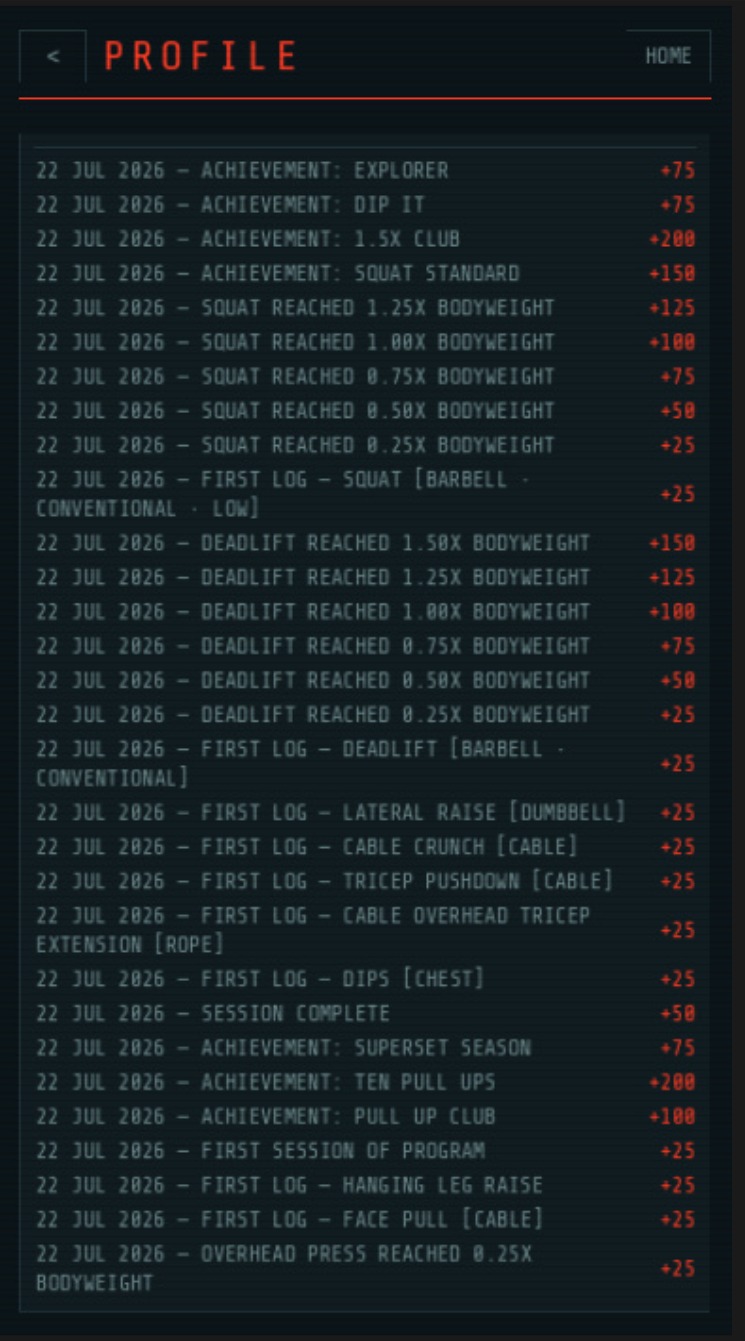
The tone matters. The Comeback does not care that thirty days were missed. It celebrates the session that happened next. Rewards are deduplicated against history so progression cannot be farmed by deleting and rebuilding a program, and every XP event remains visible in the profile as an honest activity log.
A tracker with its own identity
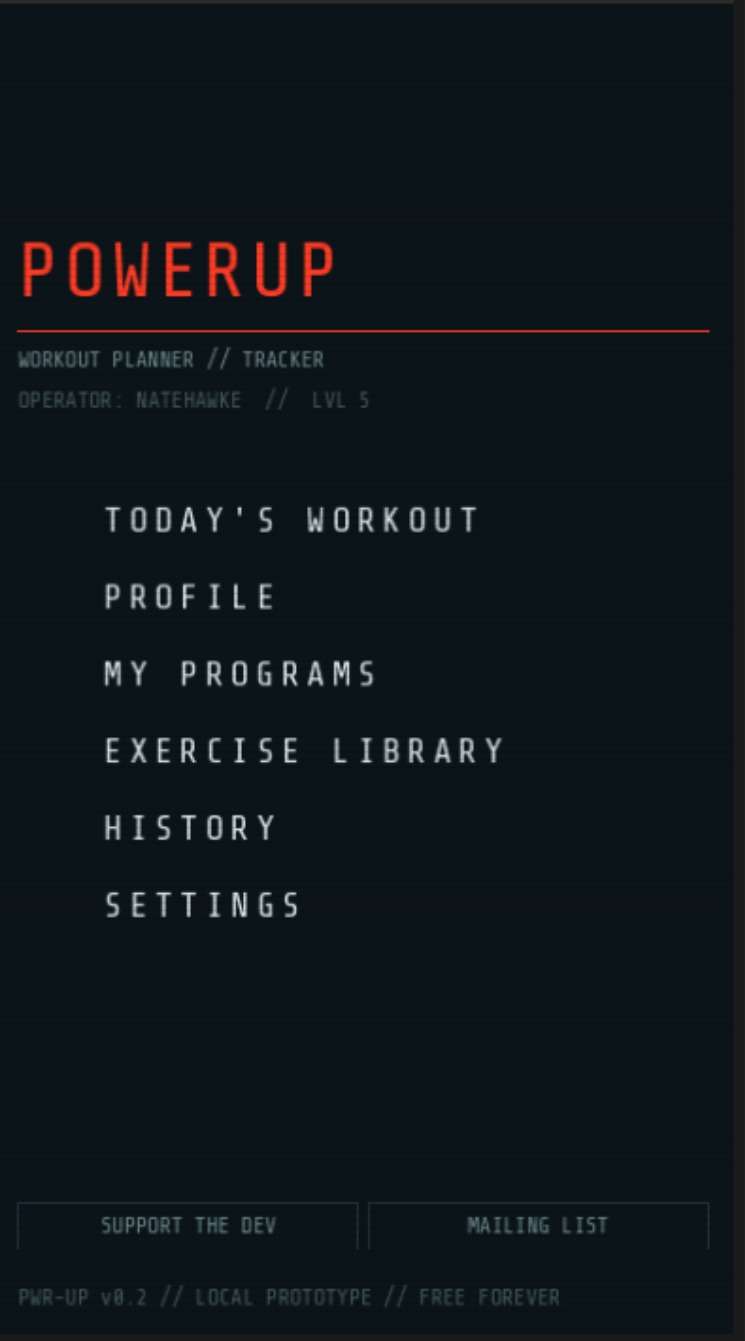
PowerUp is local-first: no account, no cloud and no telemetry. Data stays on the device as readable JSON. The interface is a portrait-first sci-fi terminal with flat panels, thin rules, scanlines, a single monospace typeface and red-orange accents. It looks unlike the white cards and blue gradients that dominate fitness software, but the fiction never turns into a drill sergeant. Empty states reassure, errors explain, and the app addresses the user as an operator without ever ordering them around.
The emotional loop is simple: train, log honestly in seconds, get a small moment of recognition, see the long arc move upward, and come back. The planner, ratings and progression systems all serve that loop.